Hiking tips
How to choose hiking gear for the mountains and long hikes
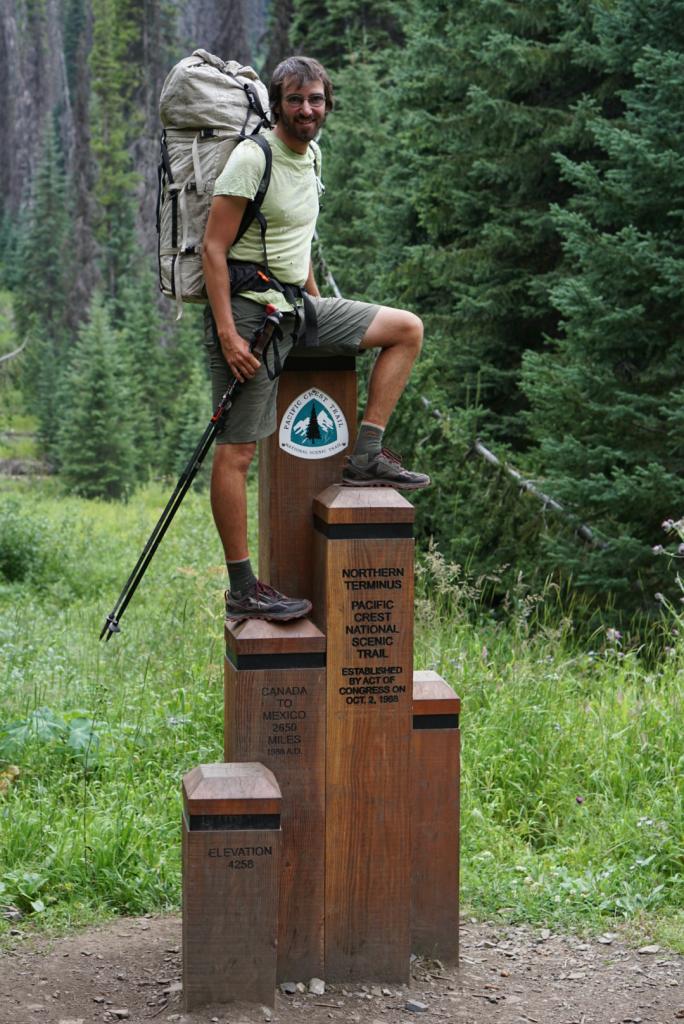
You will find my PCT story, the route map and the gear on the page Pacific Crest Trail (PCT, USA).
For more than 10 years I have been travelling the world, mostly in the mountains. I have tried a lot of gear and over the last years I have been trying to make it as light as possible. Today it seems crazy to me that from my basic kit in 2011 I took off 8 kilos and I still have everything I need. On the PCT my gear weighed about 10 kilos, and even that was above the average for most people. How come? A camera + 2 lenses + a power bank weighed 2 kilos… Some extremists, who must have been cold at night, fit into even 4 kilos! Of course, all of these are figures without food and water and just the pure weight in the rucksack.
In the article you will learn about my experience, which gear I used, which I use now and what I am considering, and also what hikers use on the Pacific Crest Trail in the USA according to the 2019 and 2020 surveys (keep in mind that some things are cheaper in the USA, and 529 of the 845 people in the 2019 survey + 486 of the 786 people in 2020 (who did not go because of corona) are from the USA). Whoever goes on the PCT is 99% ultralight. I will write only about gear and brands that I have personal experience with. The article will be updated regularly – last edit 3 November 2023.
From a heavy tent to an ultralight one
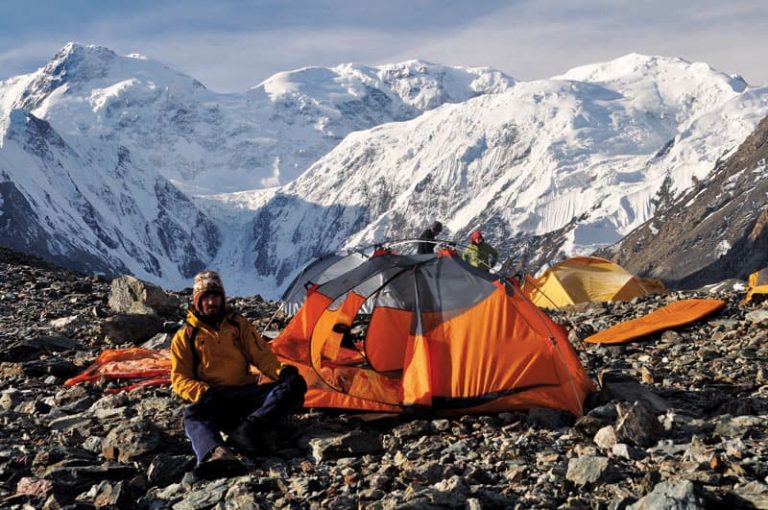
- In 2008 I went to South America without a tent. I had never camped alone before. In Chile I understood that if I wanted to go hiking, I had to buy one. In Puerto Montt I could choose from only about two tents. That was all the two shops had at the time, out of season. One black no-name tent with no mesh inside, or an orange Marmot Earlylight 2L. It served me well for seven long years. It weighed 2.5 kilos.
- Right before my trip to Indonesia in 2015 I invested. I bought an MSR Hubba Hubba NX for 2 people, which I first saw in Patagonia. Better, roomier inside and it weighs only 1.5 kg. Like the Marmot, though, it gets damp from below on a wet floor. Until now it had no competition from a $30 Walmart tent that had such a plastic sheet underneath that nothing came through. But that one weighed over 3 kilos and even the second layer was not sturdy :).
- I started the PCT with the MSR. After 3 months, when I finished walking in snow, I swapped it for Six Moon Designs Gatewood Cape (318 grams without the trekking pole and pegs), to which I then added a Sea to Summit Nano Mosquito Net Pyramid (98 grams). Yes, another kilo off. And yes, it is such a funny thing that if you kick it, it probably falls down :). I saw it with one guy and he was mega happy. I am half a head taller than him, 183 cm, so I touch the wall either at my head or my feet, but it was enough to survive and even for the Canadian Rockies. Going down in weight was very important, because when you walk thousands of kilometres, every gram counts. In the USA it rains fairly little, in California hardly at all. And yes, it has no floor. On the ground I put a thin Tyvek under my sleeping mat, a builder’s sheet, so that I would not accidentally puncture it.
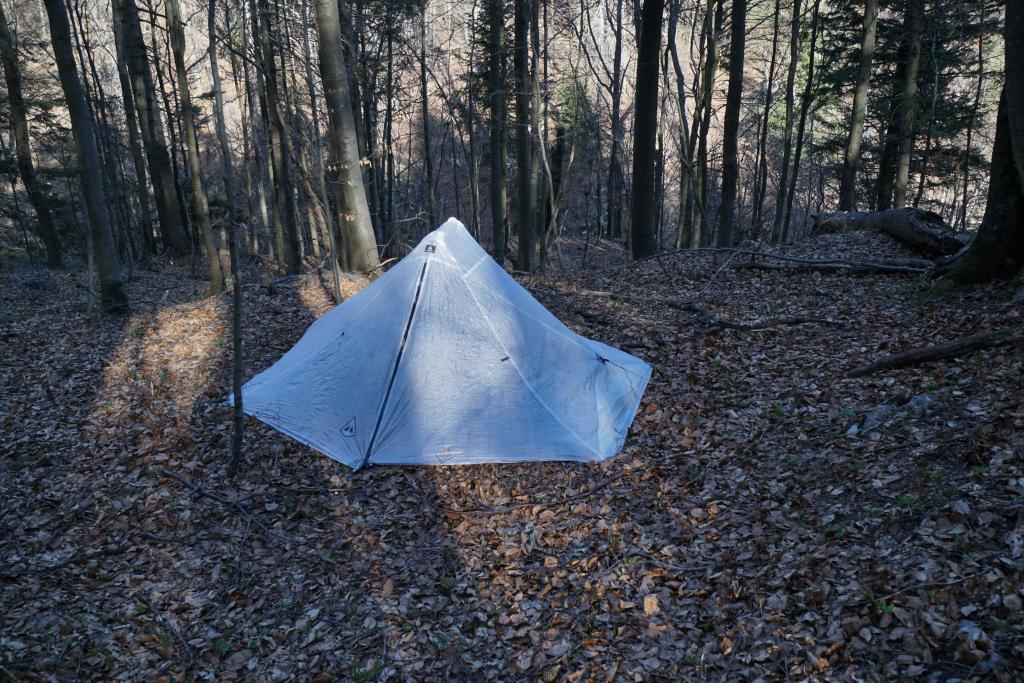
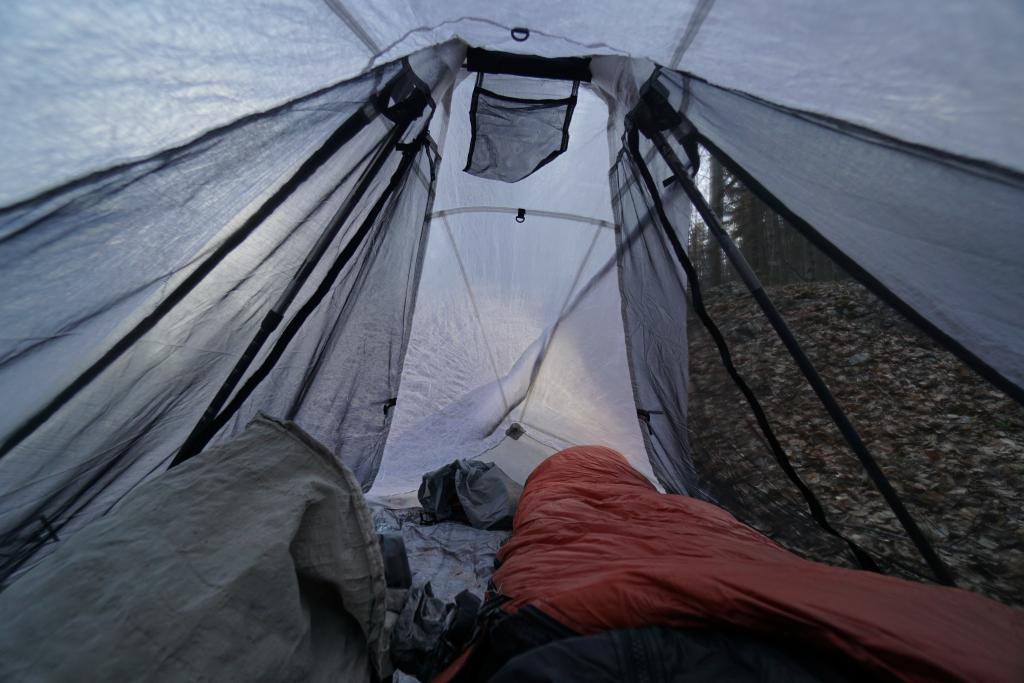
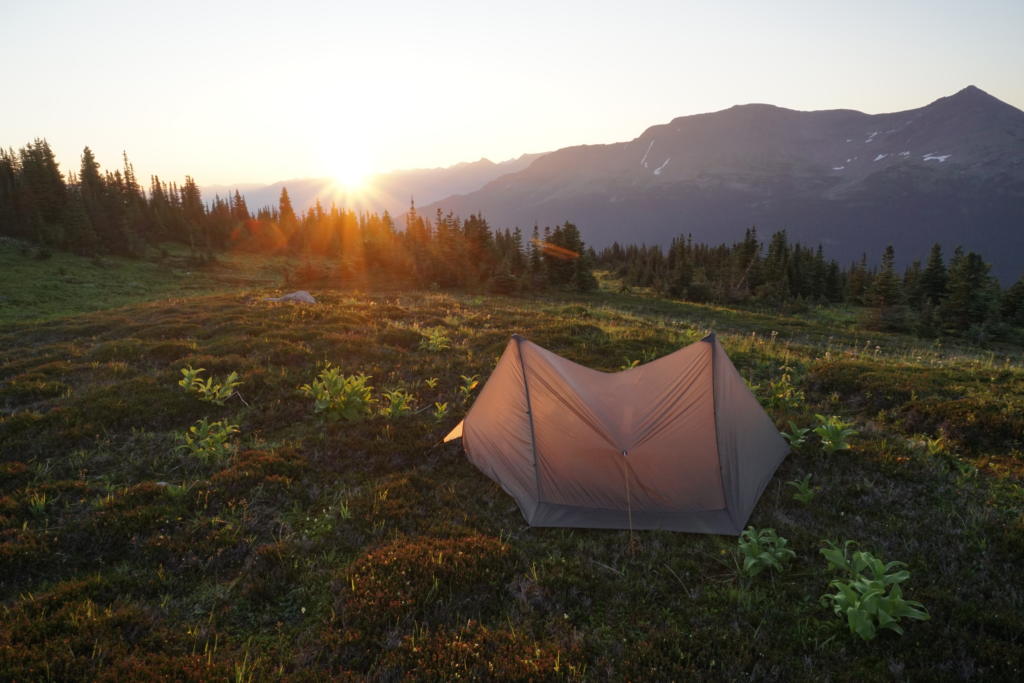
- I brought a present home from the USA. Probably the most expensive piece of outdoor gear I have ever bought. I was deciding between the Zpacks Duplex and HMG. What decided for HMG was that it is made of a tougher material, so I believe it will last longer. With the HMG Dirigo 2 I have so far only been around Slovakia, but I have also already slept on snow. And in the morning the sleeping mat was dry underneath. It is for two people and weighs 794 grams (the pegs are another 145 grams). Two trekking poles are used as the structure. The first pieces were made only during 2019.
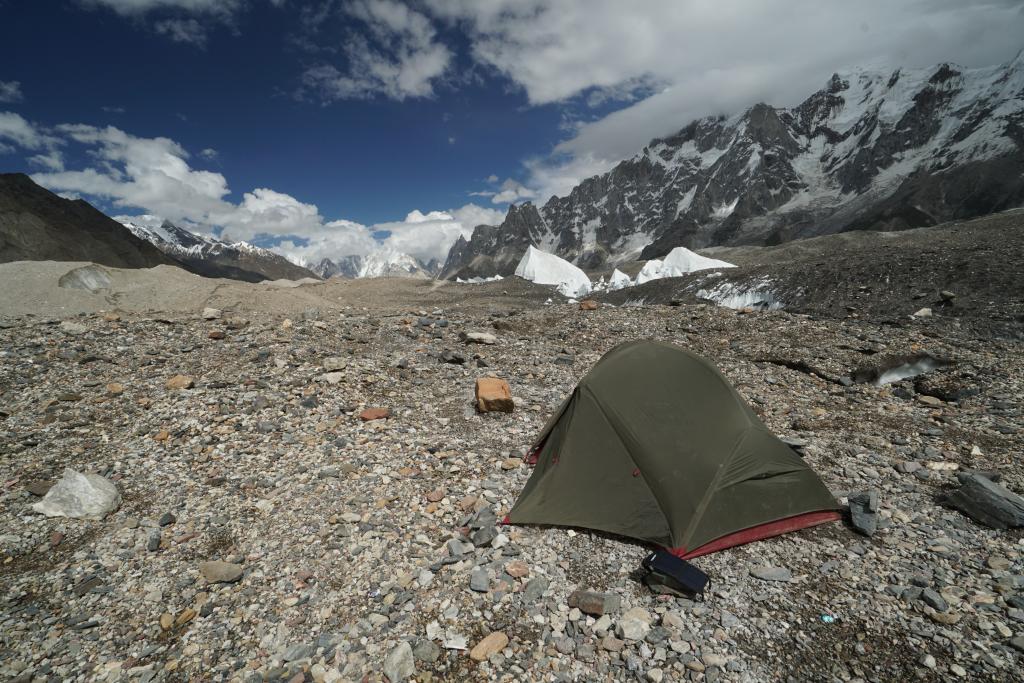
- In summer 2022 the HMG tent already had small holes and above all the zip was failing. Sometimes I had to zip it 4 times before it closed properly. So I switched to Gossamer Gear The Two. It is lighter – only 667 grams, the material is thinner and it is much, much roomier – while the HMG had the poles close together at the top, Gossamer Gear has them even further apart in the air than on the ground, so there is a lot of room in the tent. I carried one spare pole in case one broke. After the season I also added tent poles to my gear, which were sold out in the USA, so I will not carry an extra trekking pole.
- In autumn 2022 I also added a tent from Big Agnes with its own frame to my gear, which I plan to use in regions where there are rocks and it is not easy to drive pegs in, so a tent with its own structure that can stand anywhere will be the better choice. One guy in Canada showed me how even a tarptent can be pitched stably with the help of stones, but this will certainly be more stable. I am curious how I will get used to pitching a tent with a frame again. When you get used to simple poles, everything goes easier and faster with them.
- During summer 2024 I took only the top part of the Durston X-Mid 2, which weighs 580 grams, for the Pyrenees crossing. I just had it pitched on poles and it held wonderfully. Together with the inner tent (I will try that some time too) it is only 1,005 grams. During the hike I also met a Frenchman who had the same tent, but in Dyneema (X-Mid Pro 2+), which weighs only 550 grams including the inner. But the price tag is quite high too :).
- In spring 2025 I took a tent to Nepal and India: BIG AGNES Fly Creek HV UL2, because I knew I would often be on rocks and in places where the Durston would be harder to pitch. So at the moment I alternate between the Durston and Big Agnes depending on terrain and where I am going.
- There are many brands and quality tents. You just have to choose. There are endless sites and discussions about the best tent for the Pacific Crest Trail (PCT) or the Continental Divide Trail (CDT), the long hikes in the USA. A small tip: if you want lighter gear, look at what people carry on the CDT. If you want more comfortable gear, look at the PCT (which is often people’s first long hike).

How I chose the right rucksacks for long trips
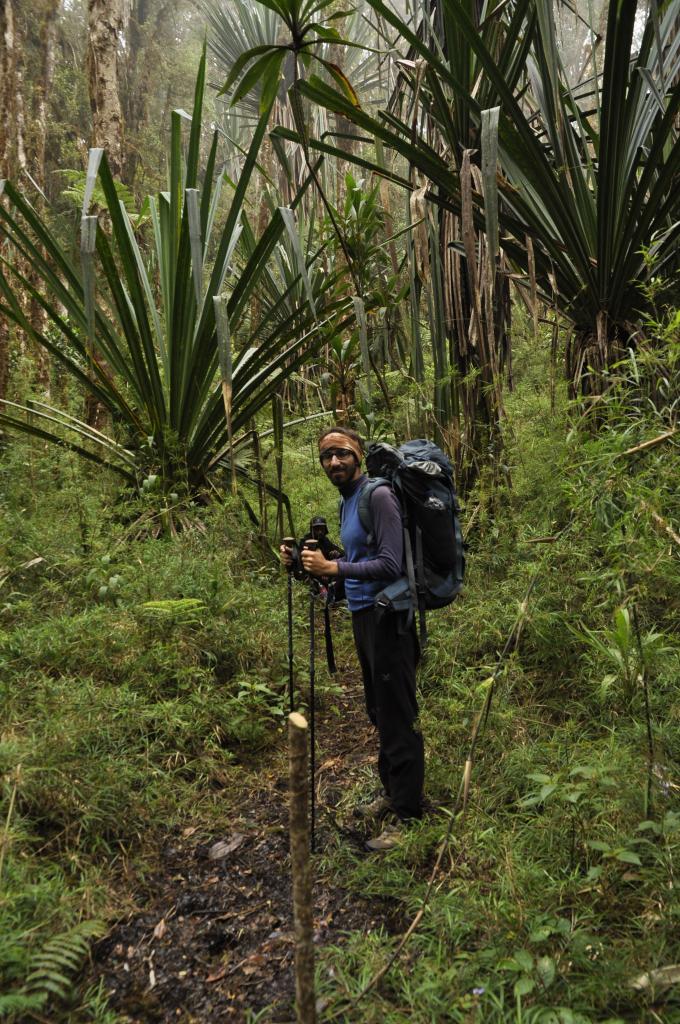
- My main recommendation for beginners travelling the world: always be able to pack absolutely all your things into one rucksack. If you are not going only on a long hike, it is good to have a small day pack in it (for example Decathlon has 10 and 20 litre rucksacks for a few euros that weigh a few grams). Travelling with two rucksacks and one on your chest I consider crazy. I believe those days are behind us. For example, when I walked 200 km across the Pamirs with everything (in 2011), including food for 10 days, I managed to attach a small rucksack to the big one in such a way that, although the small one sat on the big one above the level of my head, I had everything on my back.
- From 1999 I used a Treksport Tatran 80 rucksack for 13 years. The good old one made in Slovakia. It travelled South America and Asia with me. Over 1,600 km of hiking in Asia showed me that it was time for something new. It was stitched up several times in Uzbekistan and Kyrgyzstan. It endured a lot.
- In 2013 I swapped it for a Bergans Trollhetta 75 l. I must say that I immediately felt a huge difference. I had never before worn a rucksack with a better back system. On hikes it is a completely different level.
- Back in Kyrgyzstan in 2011 I met a guy who had ultralight gear down to a fine art, and his pack together with an inflatable kayak weighed less than mine. I started lightening my gear significantly in 2018, also thanks to a collaboration with outdoorline.eu, which is the only ultralight shop in Slovakia. Since 2018 I have had HMG – Hyperlite Mountain Gear 4400 Porter. Although it looks like a sack, while the Tatran and the Bergans weighed 2.5 kilos, this one is only 1,065 grams. As I see it, the 2020 model has a few grams more. Although it has no back system, it fits me like a glove and it is really mega. I walked almost 4,000 km in it in the USA and Canada, and I chose this model because I can attach both a splitboard and ski touring skis to its side. Since then they also have a model made exactly for that.
- After the hikes in Colombia, Mexico, Guatemala and the Colorado Trail my rucksack was close to falling apart. First I bought a Mountainsmith Zerk 40, which was a bit too small for me after all. With camera gear and food for 4 days it burdened me more, and the hip belt is more for decoration than function. I recommend it warmly for day hikes, or if you do not take photos. It does not even have a strap to attach a PeakDesign camera holder. The only option was on the hip belt. Higher, almost on the shoulder, it was not pleasant after a few days.
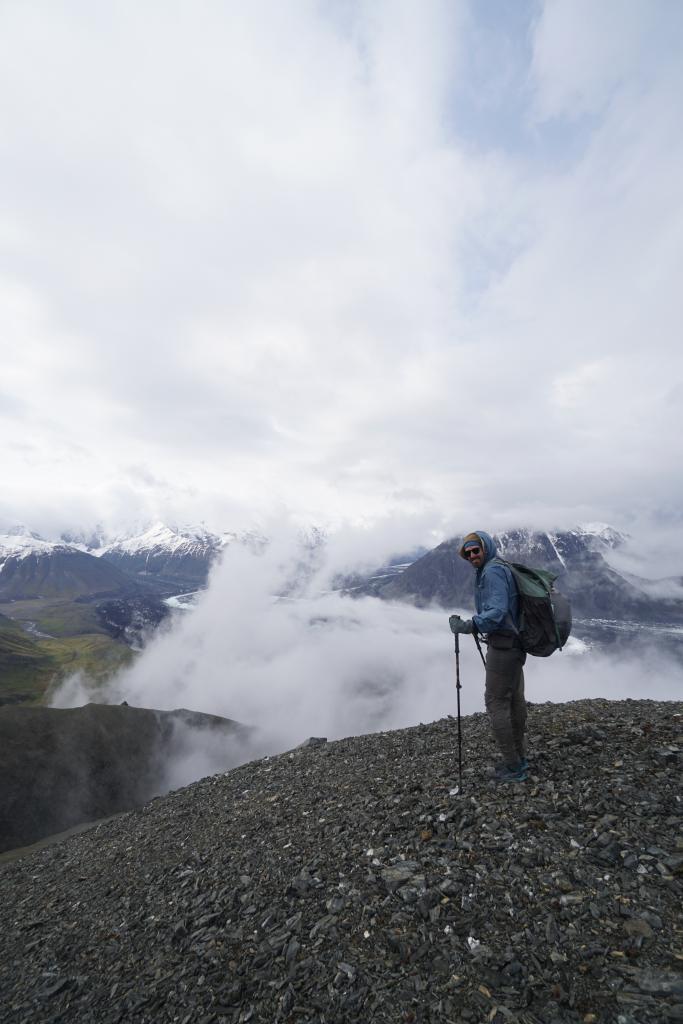
- After a week in Alaska (summer 2021) my Gossamer Gear Mariposa 60 arrived. Matúš Lašan, who walked the whole of New Zealand and almost all of Patagonia with it, also told me about it. For me the big changes were the large side pockets on the hips, the side pockets for bottles and the compartment on the back of the rucksack. So far I am very satisfied and I am curious how long it will last :).
- At the end of the trip in 2022 I also added Gossamer Gear Vagabond Jet, which fitted me wonderfully with a laptop and electronics on a plane.
- In 2023 the Gossamer Gear was already worn out, so I went back to HMG, this time to the model Junction 3400 Black L, which I am very happy with and still use (the black colour is made of a thicker material and lasts longer than the white).
- PCT hikers in 2019 (survey sample: 259 people): Osprey 82 people, Zpacks 36, ULA 34, HMG 25, Gossamer Gear 22, Granite Gear 12
- PCT hikers in 2020 (sample of 172 people): Osprey 69, Zpacks 32, ULA 21, HMG 14
- I have heard that Osprey rucksacks have a lifetime warranty and that they replace a destroyed one with a new one. But I do not know whether only in the USA or everywhere in the world. Zpacks has interesting things, but sells them only through its own shop, so if you want to order them to Europe you have to add customs duty, and their service is said not to be as good as HMG or Gossamer Gear.
My sleeping bags in my hiking gear
- I almost always bought abroad. I bought my first in 2004 in the USA. It was a North Face rated down to −18 degrees, with hollow fibres. For the first year I kept it at home packed in its stuff sack. Only later did I find out that this is wrong and a sleeping bag should breathe. A useful tip for beginners too: a sleeping bag should not be folded or rolled, but always simply stuffed into its sack. So that the fibres or feathers are not always stored the same way, and it lasts longer. I bought the second and third in Nepal when I was looking for new Vibrams. When I saw a used 1.5-kilogram down sleeping bag for 20 euros in Kathmandu, I did not hesitate. Yes, it was used. And the same for a one-kilo down bag for 40 euros that I found in Pokhara. Luckily I met a friend who knew people who took part of my luggage home. At home it only needed a trip to the dry cleaner and they serve well.
- I went for a new sleeping bag only in 2018, before my trip to Pakistan and India. I chose the Cumulus Panyam 600, which Milo Daníšek took on the Pacific Crest Trail in 2017 and I also had it for the whole PCT in 2019. I had no problem even when I slept on snow, only when it was hot I used it as a blanket. Besides this winter one I will soon add something lighter for summer hiking.
- In summer 2021 I added a quilt to my gear: Katabatic Gear 22 Flex (900 goose down, water resistant). What is that? It is like a sleeping bag, but on the underside (where you sleep) it has a cut-out and it has no hood. For a long time I hesitated whether to go for it, but after a month I cannot praise it enough. It saved me several hundred grams of gear (644 grams instead of 950 grams) and yet it is warm and wonderful. It froze outside (not in the tent, my water did not freeze), but I did not even have to use the straps that tie it around the sleeping mat. An amazing thing that pleased me the most of the new gear. I also had it for the whole of 2022 and recommend it warmly. From Katabatic I also have a bivvy: Bristlecone, which weighs only 220 grams. When I test it properly, I will write.
- PCT hikers in 2019 (sample of 220): Enlightened Equipment 104, Western Mountaineering 16, Marmot 15, REI 15, Zpacks 14, Cumulus 11
- PCT hikers in 2020 (sample of 150): Enlightened Equipment 43, Western Mountaineering 23, REI 17, Zpacks 13, Cumulus 13
- In 2019 on the PCT many people skipped the Sierra in snow. And those who did go through it mostly had thinner sleeping bags and I think they must have been cold. In my opinion you should not save on your sleeping bag.
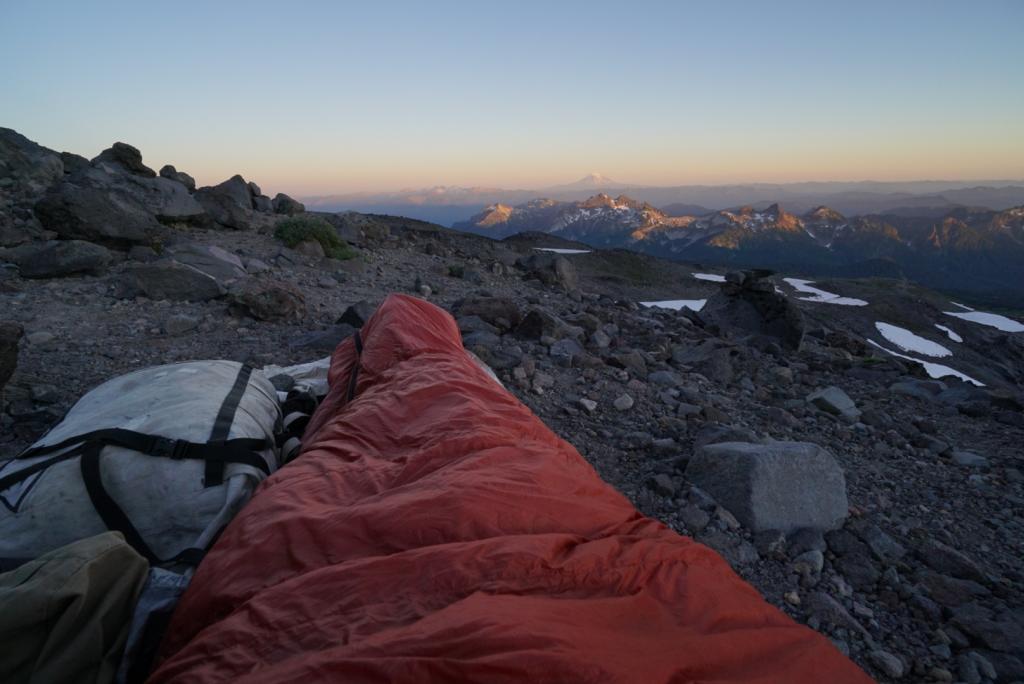
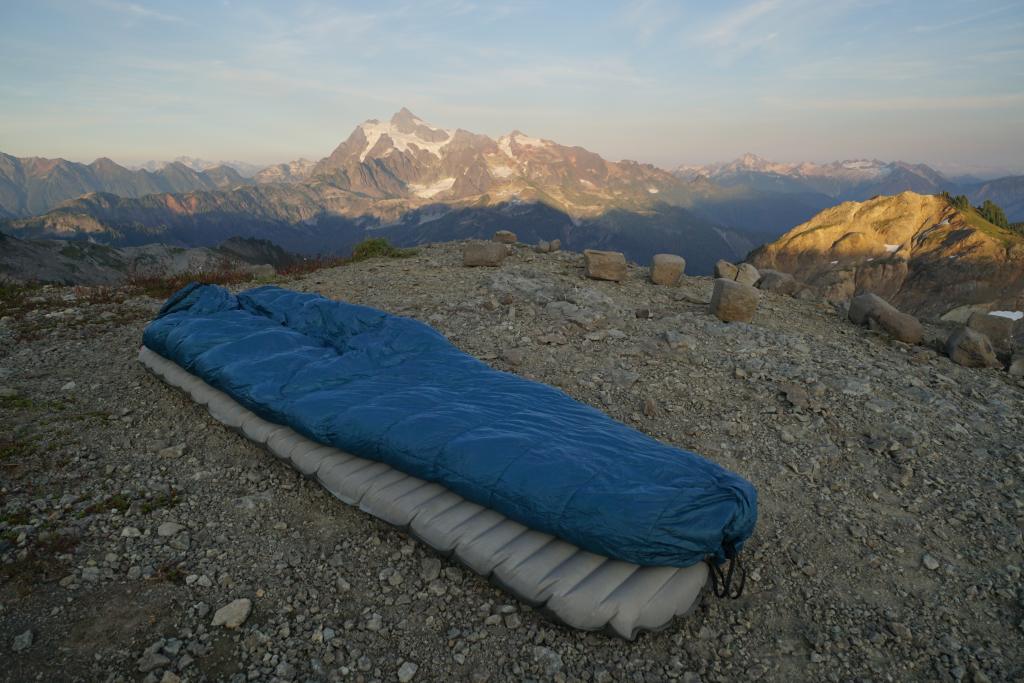
A sleeping mat is very important, especially in winter and on snow
- I bought my first inflatable sleeping mat back in the USA in 2004. The second in Chile, when in Uruguay a dog chewed up my thicker foam one. A classic Thermarest ProLite inflatable lasted a long 8 years, until a bubble started to form. After two years the same happened to a Trimm Lullaby inflatable. In both cases I was camping under a tree and probably forgot to open the valve of the mat. I tend to, though, so I have no other explanation. The most important factor in choosing a sleeping mat is the R-value, that is, thermal insulation. So it depends how insulated from the ground you want to be. A nice comparison is on this page. So when someone on the PCT had a foam Thermarest with R-value 2.6, I assume they were cold from below too. Whereas the Xtherm has an R-value of 6.9, insulates much better and, as I saw in one video, it is divided in the middle and your own body heat warms you. Of course, it is also more expensive.
- For the last few years I have had the sleeping mat Thermarest NeoAir Xtherm (435 grams). Friends recommended it to me and it is really incredibly light and wonderful. Thermarest has also invented the Uberlight series mat, which is even lighter. At the end of the PCT it had several tiny holes from wear. I patched three, but it still almost deflated by morning every time. Then I took it in for service and instead of patches they replaced it with a new one. Pavel, who walked the PCT and the CDT, has had his replaced twice. It has a lifetime guarantee – that is, if you do not do something stupid.
- Since the end of 2025 I have swapped the Thermarest for Nemo Tensor and it is also absolutely wonderful and rustles much less.
- PCT hikers in 2019 (sample of 235): Therm-a-rest NeoAir XLite 88, Therm-a-rest Z-Lite Sol Reg 31, Therm-a-rest NeoAir Xtherm 23, Big Agnes 18
- PCT hikers in 2020 (sample of 179): Therm-a-rest NeoAir XLite 69, Therm-a-rest Z-Lite Sol Reg 24, Therm-a-rest NeoAir Xtherm 21, Sea to Summit 17
Are boots or trail runners better for long hikes?
Full boots
- In South America I had trekking boots rather than backpacking ones. I no longer remember the brand, but after 800 km of hiking I had totally torn the sole off, until almost nothing was left.
- From 2010 I had Lowa Tibet, which Mišo from Trekland recommended to me. They were really wonderful and survived all those rocky and glacier hikes in Central Asia. I destroyed them only in Nepal after the first hike. A hole appeared on the toe of one, so big that even a leech got through and bit my toe. The sole was totally great, though.
- In Nepal before the second hike I bought Salewas, whose model I could not even find on the internet. They are good quality, but I liked the Lowa Tibet more (they just did not have them there), and so now I have them again. If you want something for hikes with a heavy rucksack, I recommend them.
- In summer 2015–2016 I tested and tried both full boots and trail runners in the mountains. And as I try, I put full boots on my feet less and less. At the moment I use Vibrams only when it is winter and snow in Bratislava. It may sound crazy, but even 5 weeks of snow on the PCT we walked (95% of people) in trail runners. Why? They are much lighter, you get further and they dry quickly. There are even studies according to which one kilo extra on your feet is like 5 kilos in the rucksack.
Trail runners
- For the hike across Rila and Pirin in Bulgaria I took Salomon Speedcross 3. To my surprise everything went fine even with a rucksack. I still have them and occasionally go running in them, but since the PCT I buy trail runners one size bigger, so that my toes do not hit the front on descents.
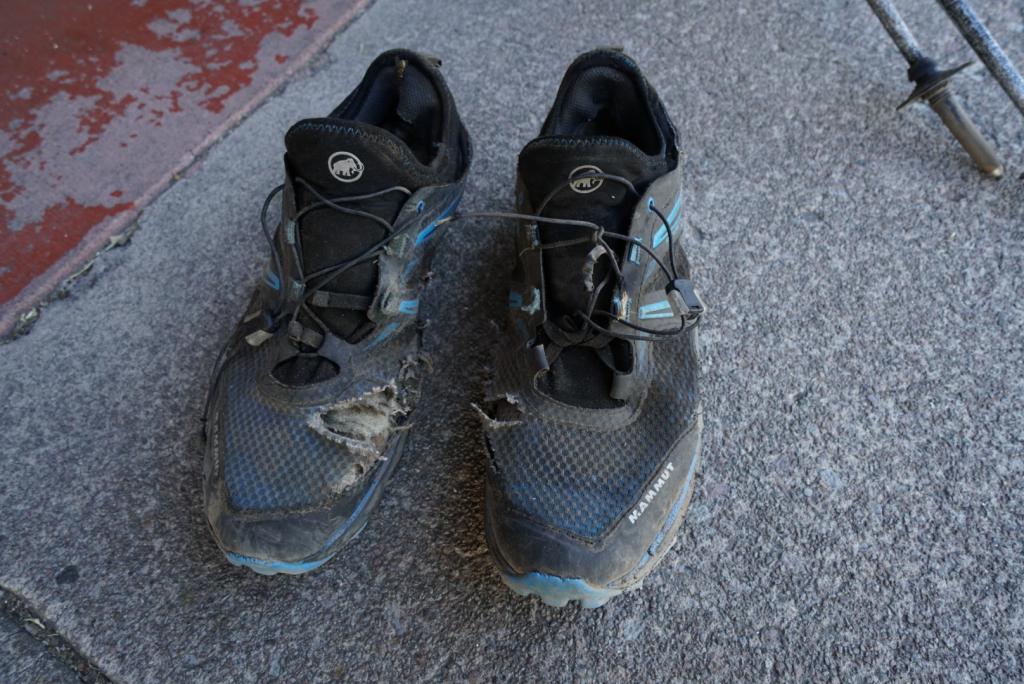
- I started the PCT in the same trail runners as Milo on the PCT in 2017, the La Sportiva Akasha. A great shoe. With the first pair I walked around 1,400 km and truly, there was no cushioning left and there were holes too. In Bishop I bought some Mammuts in a second-hand shop, the third pair were Akashas again. For the fourth I tried the Altra Lone Peak 4, which are zero drop – that is, without a raised heel – and many people praise them. And they are really like slippers. In Slovakia few people know them. In recent years I alternate La Sportivas with Altras (depending on what is available where and the prices).
- In 2022 I alternated shoes according to what I could get in South, Central and North America. Besides two pairs of La Sportivas I also had two pairs of Salomons and they were good too.
- In summer 2024 in the Pyrenees I had Altra Olympus 5 black, which last longer than the Lone Peak model. And yet the feeling when you have them on your foot is completely different. The Lone Peak is still probably the most comfortable shoe I have had, but for rocky terrain it is better to have something that lasts longer.
- I then swapped the Altras for trail runners Topo Mountain Racer 3 also with a wide toe box, and I am extremely happy with them. In spring 2025 I took to Nepal SCARPA Ribelle Run Kalibra G, which was the best thing I could have done. They are higher and therefore warmer, you can put crampons on them (not ideal but they hold) and they weigh about the same as low trail runners! I recommend them warmly to everyone, whether for running in snow, or for winter/spring hikes with snow when it is not freezing too hard and you want something light and quality.
- Since everyone on the PCT has trail runners, in 2019 people started the PCT in (sample of 217 people): Altra 113, Merrell 26, Salomon 25, La Sportiva 14, Brooks 13
- PCT hikers in 2020 (sample of 176): Altra 104, Salomon 20, Merrell 17, Hoka 12


Sandals
- On trips to places where it is warm I also take sandals. But on the PCT, for example, I always had only the footwear I had on my feet. I had nothing to change into. When I wore them out, I bought new ones in town, or in the town before the next one I ordered new ones 7–14 days in advance. Of the sandals, the longest-lasting were old Adidas from my secondary school days. Maybe they made things better quality then. In between I went through Keens (they lasted me through South America) and Tevas. I was happy with both, but I destroyed them rather quickly by my standards. At the moment I have Tevas, because they weigh 150 grams less than the Keens, but I am no sandal expert. On the PCT, though, I saw a woman who walked the whole trail in sandals. I have no idea what model it was, but I had not seen such before. She did not walk through snow, though.
Trekking poles
- In my life I have destroyed at least ten pairs. I have tried many brands, but the longest-lasting were Fizan Compact 4, which I also had in the USA. I changed the tips several times, I broke one and totally destroyed the other, but I already have the same new ones. They are extra light and 4-section, so they fit inside the rucksack. There are also lighter and more expensive ones, but these are enough for me.
Do you take a stove on hikes or only dry food?
- In Central Asia and in Nepal in 2011–2012 I also had a thermoswith me. Primus is a good choice. Today, though, I no longer carry a thermos, it is heavy.
- To Indonesia I took a Nalgene water bottle , but one of the first things I read before the PCT is that Nalgene bottles are also unnecessarily heavy :). So yes, a simple plastic bottle is the lightest. In the USA I also had 2 water bladders from Evernew, but over time I destroyed both.
- While in 2011–2012 I drank water like a local even in India, had diarrhoea once a month and brought home a single-celled parasite that left me alone only after the third round of antibiotics, I now take along a filter. In Indonesia a Seychelle bottle filtered water wonderfully for me. Before Pakistan in 2018 I switched to the Sawyer Mini. After two months I ran out of patience and switched to the faster Sawyer Squeeze. It filters everything immediately.
- Cooking pot for years I had 1.4 and 2.1 litre ones from Primus (mostly I carry the smaller one) and before the PCT I switched to the EVERNEW Ti Non-Stick Pot 900, which weighs only 143 grams.
- Stove for years I had a Primus Miner, on the PCT I took a 27-gram BRS, but it broke on me halfway, so I swapped it for the MSR Pocket Rocket 2, even though it weighs 105 grams.
- I also have the Jetboil Flashsystem, where the stove and pot are in one, but because of its weight of 426 grams I have not used it that much so far. Its main advantage should be saving gas. It has good wind protection, so less is needed to heat.
- And this is perhaps the craziest thing for you – since 2015 I have been travelling with only a small spork. From earlier trips, where I always took a big knife, I found out that I do not need it. I buy cans that have a ring pull and when there is something to cut (like pineapple, papaya), I ask the locals at the market, or share with the locals I sleep with. A knife can always be found. And I do not climb on ropes, so that I would need one in an emergency.
- PCT hikers in 2019 (sample of 236): MSR Pocket Rocket 2 – 87, BRS UL-Titanium 36, no stove* – 27, Jetboil MinoMo 9, Jetboil Flash 8
- *that is, completely without a stove and only on cold food. Imagine that in a small container (in the USA a popular one is a Talenti ice cream tub Talenti) you soak couscous, rice or pasta for 2–3 hours in cold water, shaking it, and it softens. I tried it once, but it really was not that tasty. Even here, though, the biggest ultralight experts can save a few hundred grams.
- PCT hikers in 2020 (sample of 183): MSR Pocket Rocket 2 – 71, BRS UL-Titanium 34, no stove 17, Soto Windmaster 17, Jetboil Flash 16
What I eat on hikes
- Food plan for the hike to the South Inylchek glacier in Kyrgyzstan, which I carried in my rucksack (18 days, over 200 km, summer 2011)
- Breakfast: 800 g oats, 500 g dried raisins, 200 g dried apricots, 200 g nuts, 500 g sugar
- Lunch: 3 large Kyrgyz breads, 1.45 kg Nutella (700 + 750 g), 1 kg apples
- Dinner: 4 instant mashed potatoes, 10 instant noodle packs, 8 carrots, 2 onions, 4 tomatoes, 800 g pasta, 2 cans of tuna
- Drinks: teas and lemon
- Do you think that was enough? No. If it were not for the Russian climbers who had successfully climbed Pik Pobeda and were preparing for a helicopter flight, and gave us about 5 kilograms of food including 2 kilograms of canned meat, we would have been a bit hungry in the last days.
- Truly, it was not all that glorious. Although there are more extreme guys. I know a guy who cycles around the whole world, even through deserts, and takes 100 instant noodle packs for food, which lasts him several weeks. Or the guys who once gave a talk about going around Iceland on folding boats. They also lived on instant noodles. And that is truly no temptation and no delight. It is better to have something better.
- Around 2017 for a while I took Mana on hikes – a powder that you dilute with water and drink. It is a complete meal replacement (they have it as a powder and now also liquid). I tried it first at home, then on a 3-day, a 5-day and later an 8-day hike. I consider the main advantages: with Mana I do not have to take a stove (it is light and saves weight), it tastes good (the consistency and taste I would compare most closely to pancake batter), it digests well (it is light and I never felt heavy), I never felt hungry (although they recommend about 1.5 litres if I wanted to drink only Mana – so even though I had 300 ml in the morning and 450 ml in the afternoon, at the end of the day I still had energy and no hunger). That said, I always supplemented Mana with nuts, dried fruit or chocolate. I have never lived purely on Mana, because I like food and fruit too much :). But I take it as an excellent meal replacement for hikes, or also for the city or when you have limited time and want to eat something sensible. And I am not yet such a pro that I would mix my own powder.
- Food on the PCT (2019)
- Breakfast: oats, raisins, nuts and dried fruit, cocoa (Swiss Miss), sometimes also dried milk
- Snack:
- sweets – Snickers (I guess over 100), chocolate chips, occasionally various wafers
- nuts, raisins
- tortillas with Nutella, peanut butter, honey, ham or cheese (various variants)
- chips (I had them only twice – when you walk so much you need energy. My body is, however, used to sugar. I think chips have as many calories as bars)
- Cooked food:
- instant noodles (but mostly without the seasoning)/dried mashed potatoes/couscous with tuna or salmon (in the USA tuna and salmon also come in lightweight plastic packs, so you do not have to take cans)
- occasionally rice, pasta, or later often Knorr rice and pasta with sauce
- I always ate fruit and vegetables in towns, when I was restocking
- At the moment on hikes I enjoy the food from Adventure Menu.
- You can read more in the series of interviews: Food on the road (in Slovak) (more interviews here (in Slovak))
- If you go to Alaska, or to some national parks in the USA, you also need a bear-proof food bag. In 2019 I carried a big bear canister, which weighs a kilo. In parks like Yosemite it is still mandatory at the time of writing this article. In some parks, though, an Ursack is enough – a bear-proof food bag reinforced with Kevlar (at least I think so), which a bear cannot open. It can jump on it and turn it into juice, but it will not open it. And it weighs only 215 grams!
Clothing
Lower body
On the PCT in the USA I had: 3 pairs of socks, 2 pairs of underwear (even that is supposedly 1 more than you really need :), 1 pair of shorts, 1 pair of merino long johns, waterproof trousers, small gaiters
Socks – For years I had various socks. For a long time I loved Bridgedale knee-highs, and the merino from Bergans or Smartwool is great too. Recently, though, I have come to like Darn Tough. They fit wonderfully and above all they love the PCT and long-distance hikers and all hikers. They have a lifetime warranty, so when you destroy them, in the USA they replace them with new ones. You can also send them by post. I have 4 pairs, so maybe when I destroy them all, I will send them. Or I will support them, since in the USA they replaced them for me. Of course, they had to be washed for the exchange :).
Underwear – I am gradually moving from cotton to merino. What I take also depends on the weather and temperature. I have merino underwear from Devold and it is great.
Shorts – Definitely merino
Trousers: At the moment in the mountains I wear light Marmot waterproof trousers, which I still have from South America. I plan to replace them soon, though, because after 10 years they are not as waterproof any more. In between I wore various Gore-Tex ones, but because of weight I will go for something light. When I splitboard I take Burton AK snowboard trousers, which are on braces and reach high up the back.
Upper body
On the PCT in the USA I had: 2 cotton Cestou necestou T-shirts, 1 long-sleeve merino, a down jacket, an ultralight waterproof jacket (Yes, and it was enough. And I mostly had the down jacket on only in camp. While walking only for a few hours).
T-shirts: 100% merino short-sleeve T-shirts of 150 gsm I always destroyed very quickly, so I now take them at most to town.
Merino first layer: Apart from short T-shirts I wear only merino. For a weight of 190–230 grams the merino T-shirts that suit me best are from Devold and Bergans. I prefer Devold with a collar and I like that it has a longer cut at the back and protects the lower back better.
Down jacket: First I had a Northland down jacket from Scandinavia in Poprad, at the moment I use a Crux down jacket (they once had it in Outdoorline ).
Jacket:
- In Asia in 2011–12 I had a yellow Millet. It has reinforced shoulders, is made of tough Gore-Tex and is stretchy at the sides. I am very happy with it. It weighs 678 grams, though. And when I go somewhere for long, where it will mostly be in the rucksack, I go by weight.
- In following years I wore, and sometimes you will see me in, Klättermusen Algrøn. It is lighter (562 grams), looser, and I feel really wonderful in it. The hood is also better designed for wrapping up. And it is elegant for the city too.
- On the PCT, though, I needed to lighten even more. The absolute extreme in past years was a 160-gram HMG jacket, which cannot be bought any more. So I got an extra cheap jacket: Frog Toggs. It weighs 200 grams, costs 20 euros, but when you pass a bush, or sweat inside, you are wet… Ideal only as a reserve on a long hike where it should not rain :).
- At the moment you can meet me on hikes in the jackets Bergans Rabot V2 3L Jacket (356 grams) or Rab Downpour Plus 2.0 (375 grams) or, if it is not supposed to rain, Devold Heroy Merino Jacket M (338 grams).
Gloves – For years I wore mainly gloves from Bolivia. Inside a warm fleece layer, outside a layer that the seller said is 70% waterproof. Whether only 3 drops out of 10 get through, I have no idea, but in the dry they are properly warm. On the PCT I had the inner of the Bolivian gloves and an outer waterproof glove from Borah Gear.
Second layer for the city: Because of weight I started to wear several things only in town. Even though they are good and quality, weight is weight. I really like the Devold thermo jacket. I wore it for almost 3 whole winters. It is wonderful, comfortable and really great. Last year I also wore a lot of a sweater from Black Hill Outdoor. Beautiful and wonderful. On a hike, though, I would really sweat in it. But if you want something nice and natural, I recommend it warmly.
Head
Hats I have many, but my favourite is the reversible hat from the market in La Paz, Bolivia. It seems the warmest of the ones I have and covers the ears best. Recently I also tried a merino hat from Bergans and was pleasantly surprised. It is really mega :).
Photography gear
- Since about 2010 I have been shooting on a Nikon D90 with Nikkor 50 1.8 and Sigma 17-70 2.8-4.5 lenses. For the Nikon D90 I had 3 batteries, so I can take 2,500 photos without needing to recharge.
- In 2018 I switched to a Sony a6300 with Sony 50 1.8, Sony 24 1.8 (I had it on only one hike – it was wonderful but because of weight I carried only two) and Sony 10-18 mm lenses. I have 3 batteries and carry a 20,000 mAh power bank (maybe a smaller one would be enough for me).
- In 2022 I added a GoPro Hero 10 to my gear and swapped the 20,000 mAh power bank for two 10,000 power banks (because I charge two power banks faster than one).
- In 2024 I went on a hike with only a Google Pixel 7a phone and an Insta360 X3.
- In 2025 I added a Ricoh GR III to my gear (for Asia also with a Ricoh GA1 + GW4, which I did not use much) and later swapped the Insta360 X3 back for a GoPro Hero 10.
Other things
Compass, headlamp, a small first-aid kit, toothbrush, a copy of my passport and similar…
If you have tips for other useful or quality things, you can write in the comments. Or if you carry something different, something more or less, feel free to write. There are certainly lots of other quality brands. These are the ones I have tried, am satisfied with and would take the same thing again.
For fun: a friend went on a trip to Southeast Asia and packed a hair straightener in her rucksack. I did not understand. She understood it right away in the first hostel in Thailand, where she left it.
Bonus: Take a look at the page Slovaks on hikes longer than 1,000 kilometres (in Slovak), where some other Slovaks have also published what gear they have.